
Introduction
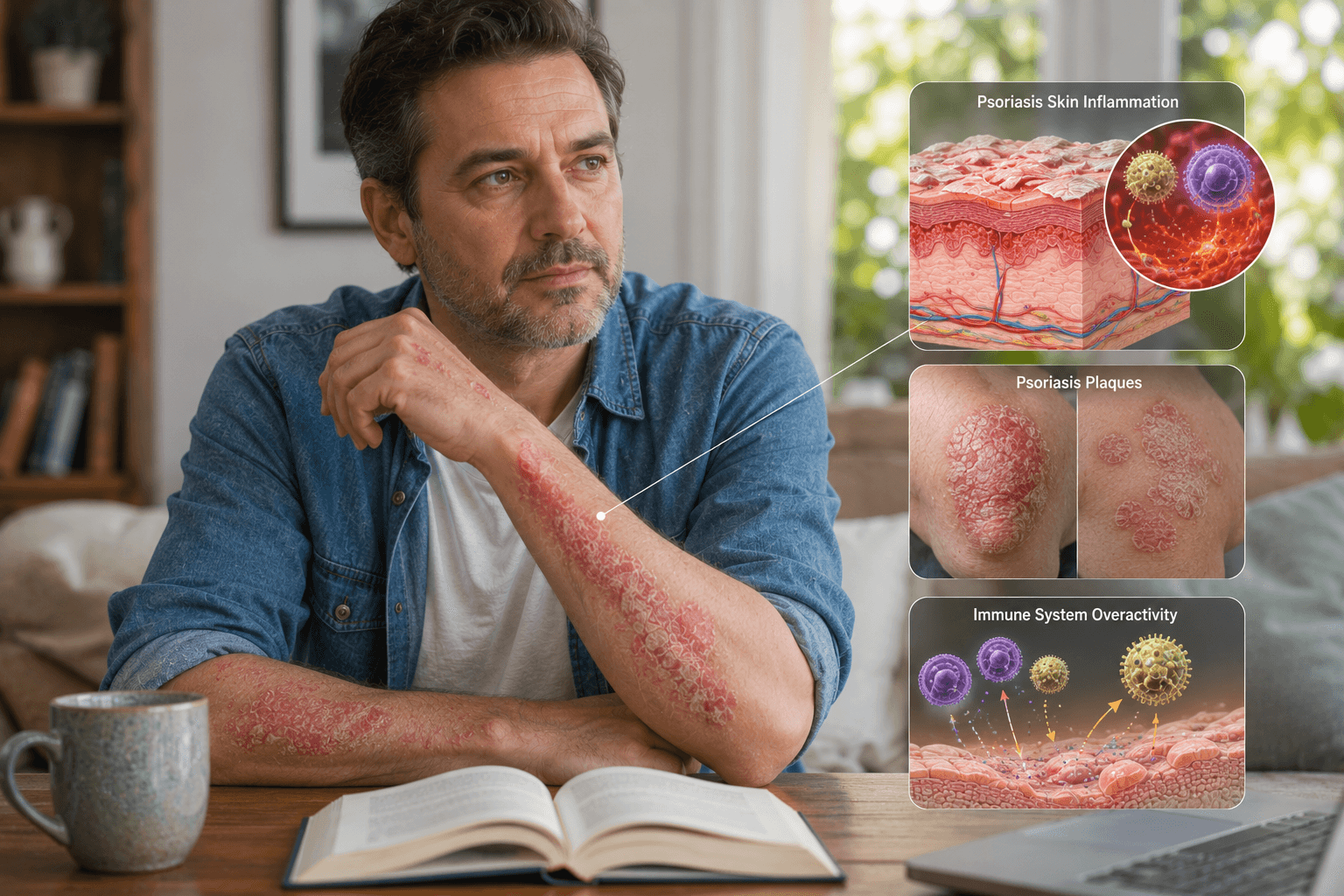
Psoriasis is a chronic inflammatory skin condition that often presents with thick, scaly, well-defined plaques and a tendency to recur over time. It can affect emotional wellbeing, clothing comfort, social confidence, and sleep, especially when lesions are visible or itchy or when patients worry that others misunderstand the condition.
Because psoriasis can present differently from person to person, it deserves an individualized evaluation rather than a one-size-fits-all approach. Many readers looking for a homeopathy clinic in Vadodara want patient education that is practical, balanced, and medically responsible. This article explains what people commonly notice, how doctors assess the issue, where lifestyle measures fit in, and how an experienced homeopathy doctor in Vadodara may think about supportive care alongside standard medical guidance.
Symptoms
Symptoms often reflect the stage, trigger pattern, and the patient's overall health. Some people notice mild changes that build slowly, while others experience episodes that are uncomfortable enough to affect sleep, work, confidence, or daily routines.
The symptom burden is not only about the plaques. Some patients deal with scalp scaling, nail changes, itching, cracking, or joint symptoms that suggest associated psoriatic arthritis.
Common Symptoms
- Red plaques with silvery scales
- Dryness, itching, or irritation
- Scalp scaling
- Cracking or soreness in affected areas
- Nail pitting or thickening in some patients
- Joint stiffness or swelling in associated cases
When to Seek Medical Assessment
Joint swelling, severe widespread flare, rapidly worsening skin, secondary infection, or significant emotional distress related to the condition deserve proper medical review. Even when symptoms sound familiar, professional assessment is important if the condition is persistent, recurrent, severe, or interfering with eating, breathing, hydration, urination, bowel habits, mobility, or day-to-day wellbeing.
Causes
Psoriasis is driven by immune-mediated inflammation and genetic tendency, but flare severity can be influenced by stress, skin injury, infection, weather, alcohol, smoking, or certain medicines.
In real life, there is often no single explanation. Genetics, environment, diet, hormones, infection, stress, inflammation, and lifestyle patterns can interact over time. Understanding the likely contributors helps patients ask better questions and helps clinicians plan investigations or supportive care more thoughtfully.
- Immune dysregulation
- Inherited predisposition
- Stress-triggered flare patterns
- Skin trauma or irritation
- Infections in susceptible patients
- Smoking or alcohol-related worsening
Risk Factors
People with family history or autoimmune tendency may be more vulnerable, and associated joint disease is an important part of long-term risk awareness.
A risk factor does not guarantee that a person will develop the condition, and someone without obvious risk factors can still experience symptoms. Even so, knowing these patterns is useful because it highlights where prevention, earlier consultation, or closer follow-up may be sensible.
- Family history of psoriasis
- Stress and poor sleep
- Smoking or alcohol use
- Cold dry weather exposure
- Repeated skin irritation
- Autoimmune or inflammatory background
Diagnosis
Diagnosis is usually clinical, based on the appearance and distribution of lesions, scalp findings, nail signs, and family history. Dermatology review may be helpful if the presentation is atypical or extensive.
A doctor may also assess for joint involvement, infection, or confusion with eczema, fungal disease, or dermatitis. Psoriasis is more than a cosmetic issue, so treatment planning often includes skin comfort, flare prevention, and screening for associated inflammatory features.
Homeopathic Perspective
Homeopathic care may be explored by patients seeking an individualized perspective on chronic skin inflammation, itching, stress-linked flares, and constitutional tendency.
In a responsible setting, homeopathy is approached as supportive care and not as a guaranteed cure for psoriasis. Severe disease, joint symptoms, and extensive skin involvement still require appropriate dermatologic or rheumatologic evaluation. A homeopathy doctor in Vadodara should help patients stay realistic and coordinated in their care choices.
At Pure Life Homeopathy Vadodara, consultation is typically centered on the individual rather than on a label alone. A homeopathic treatment plan may consider the symptom timeline, triggers, sleep, appetite, stress pattern, temperature preference, sensitivities, and overall constitution. Homeopathy should be used responsibly and does not replace emergency care, specialist referral, imaging, laboratory work, or conventional treatment when those are necessary.
Lifestyle Recommendations
Daily coping strategies often make the condition easier to live with even when complete control takes time.
Lifestyle changes are most useful when they are realistic and consistent. Small, repeatable adjustments often do more for long-term progress than extreme short-term routines, especially in chronic conditions that need monitoring over months rather than days.
- Moisturize regularly and protect the skin barrier
- Avoid aggressive scratching and harsh skin friction
- Watch for stress, smoking, or alcohol-related flare patterns
- Seek help for scalp or nail symptoms if they are persistent
- Monitor for joint pain or morning stiffness
- Use support resources if skin disease is affecting confidence or mood
FAQ
Is psoriasis contagious?
No. Psoriasis is not contagious and cannot be spread by touch, sharing clothes, or social contact. This is an important point because social misunderstanding often adds emotional stress to an already difficult condition.
Can psoriasis affect joints as well as skin?
Yes. Some patients develop psoriatic arthritis, which can cause stiffness, pain, or swelling in joints. That is why persistent joint symptoms in a person with psoriasis should not be ignored or assumed to be simple wear and tear.
Can stress make psoriasis worse?
Yes. Many patients notice that stress and poor sleep worsen flares. Stress is not the sole cause of psoriasis, but it can influence immune activation and scratching behavior, making the condition harder to manage if emotional burden is high.
Conclusion
Living well with psoriasis often depends on education, daily skin care, trigger awareness, and realistic support. Patients usually cope better when they understand that the condition can be managed thoughtfully even if it tends to recur.
If you want an individualized discussion about symptoms, triggers, and supportive homeopathic treatment in Vadodara, Pure Life Homeopathy, Vadodara offers consultation-focused care aimed at patient education, realistic expectations, and a treatment plan tailored to the person rather than just the diagnosis.