
Introduction
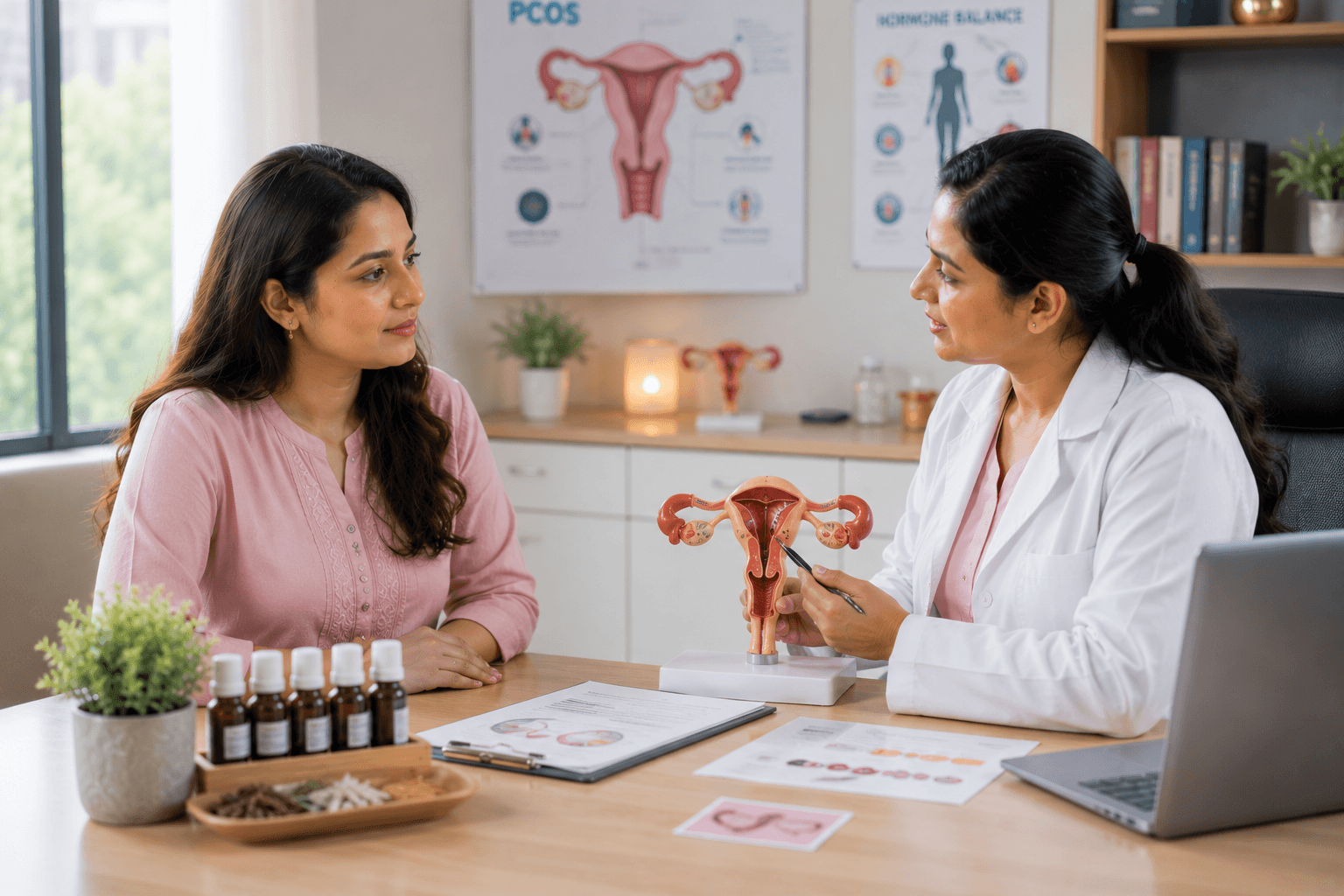
PCOS is a hormonal and metabolic condition that can affect menstrual regularity, ovulation, skin, weight, insulin response, and reproductive health. Because the condition often influences several systems at once, many women feel that they are managing not just one symptom but an entire pattern involving periods, acne, body image, and future fertility concerns.
Because polycystic ovary syndrome can present differently from person to person, it deserves an individualized evaluation rather than a one-size-fits-all approach. Many readers looking for a homeopathy clinic in Vadodara want patient education that is practical, balanced, and medically responsible. This article explains what people commonly notice, how doctors assess the issue, where lifestyle measures fit in, and how an experienced homeopathy doctor in Vadodara may think about supportive care alongside standard medical guidance.
Symptoms
Symptoms often reflect the stage, trigger pattern, and the patient's overall health. Some people notice mild changes that build slowly, while others experience episodes that are uncomfortable enough to affect sleep, work, confidence, or daily routines.
The symptom picture varies. Some women mainly notice irregular cycles, while others are more affected by acne, unwanted hair growth, scalp hair thinning, weight gain, or difficulty conceiving.
Common Symptoms
- Irregular, delayed, or absent periods
- Acne or oily skin
- Weight gain or difficulty losing weight
- Excess facial or body hair growth
- Scalp hair thinning in some patients
- Difficulty with ovulation or fertility concerns
When to Seek Medical Assessment
Medical evaluation should not be delayed when periods stop for long intervals, bleeding becomes very heavy, fertility concerns are significant, or symptoms suggest marked insulin resistance or thyroid imbalance. Even when symptoms sound familiar, professional assessment is important if the condition is persistent, recurrent, severe, or interfering with eating, breathing, hydration, urination, bowel habits, mobility, or day-to-day wellbeing.
Causes
PCOS is linked to hormonal signaling disturbance, insulin resistance in many patients, inherited tendency, and metabolic factors. It is not caused by one lifestyle mistake, though lifestyle can influence how strongly symptoms appear.
In real life, there is often no single explanation. Genetics, environment, diet, hormones, infection, stress, inflammation, and lifestyle patterns can interact over time. Understanding the likely contributors helps patients ask better questions and helps clinicians plan investigations or supportive care more thoughtfully.
- Hormonal imbalance affecting ovulation
- Insulin resistance
- Genetic predisposition
- Weight-related metabolic stress in some patients
- Inflammatory and endocrine interactions
Risk Factors
The long-term significance of PCOS goes beyond cycle irregularity because the condition can influence fertility, metabolic health, and future risk of diabetes in some women.
A risk factor does not guarantee that a person will develop the condition, and someone without obvious risk factors can still experience symptoms. Even so, knowing these patterns is useful because it highlights where prevention, earlier consultation, or closer follow-up may be sensible.
- Family history of PCOS or diabetes
- Weight gain or central obesity
- Sedentary routine
- Insulin resistance tendency
- Early menstrual irregularity in adolescence
Diagnosis
Diagnosis usually involves menstrual history, symptoms of androgen excess, ultrasound context, and laboratory evaluation where needed. Doctors also screen for other causes of irregular periods because not every menstrual disturbance is PCOS.
A complete evaluation may include blood sugar markers, thyroid testing, prolactin, androgen profile, and assessment of reproductive goals. Good care depends on recognizing whether the main issue is cycle control, acne, weight management, fertility, or long-term metabolic protection.
Homeopathic Perspective
Some patients look for homeopathic treatment in Vadodara because they want individualized support around cycle pattern, acne, stress, digestion, and overall hormonal wellbeing.
Homeopathy may be used as supportive care for selected patients, but it should not replace gynecologic evaluation, metabolic screening, or fertility planning where those are needed. In a responsible clinic setting, expectations remain realistic and the focus stays on the patient's complete symptom picture rather than simplistic cure claims.
At Pure Life Homeopathy Vadodara, consultation is typically centered on the individual rather than on a label alone. A homeopathic treatment plan may consider the symptom timeline, triggers, sleep, appetite, stress pattern, temperature preference, sensitivities, and overall constitution. Homeopathy should be used responsibly and does not replace emergency care, specialist referral, imaging, laboratory work, or conventional treatment when those are necessary.
Lifestyle Recommendations
Lifestyle management is one of the strongest foundations of PCOS care because insulin sensitivity, sleep, stress, and nutrition all influence symptom intensity over time.
Lifestyle changes are most useful when they are realistic and consistent. Small, repeatable adjustments often do more for long-term progress than extreme short-term routines, especially in chronic conditions that need monitoring over months rather than days.
- Prioritize regular meals with balanced protein and fiber
- Include consistent movement and strength-building activity
- Protect sleep because poor sleep worsens insulin resistance
- Track menstrual pattern and discuss prolonged delays with a doctor
- Manage weight gradually instead of relying on extreme restriction
- Seek fertility counseling early when pregnancy is a goal
FAQ
Does every woman with PCOS have ovarian cysts?
No. The name can be misleading. PCOS diagnosis is based on a broader clinical and hormonal pattern, and some women meet the criteria without having dramatic ultrasound findings. Likewise, seeing ovarian cyst-like changes on ultrasound does not automatically mean a person has PCOS unless the overall picture fits.
Can PCOS affect fertility?
Yes, PCOS can affect fertility because ovulation may become irregular or absent. However, fertility outcomes vary widely, and many women conceive successfully with appropriate evaluation and management. The key is not to assume the same prognosis for everyone, but to understand the individual's ovulation and metabolic profile.
Is weight loss the only treatment for PCOS?
No. Weight management can help some patients, but PCOS care also includes cycle monitoring, metabolic assessment, symptom-specific treatment, and reproductive planning. Even women who are not overweight can have PCOS, so care should be personalized rather than reduced to one piece of advice.
Conclusion
PCOS responds best to a long-term, whole-person approach. Care becomes more effective when symptoms are interpreted together and when patients receive realistic guidance about hormones, metabolism, fertility, and daily routine.
If you want an individualized discussion about symptoms, triggers, and supportive homeopathic treatment in Vadodara, Pure Life Homeopathy, Vadodara offers consultation-focused care aimed at patient education, realistic expectations, and a treatment plan tailored to the person rather than just the diagnosis.