
Introduction
Many patients diagnosed with piles immediately assume that surgery is the only available treatment option. However, that is not always the case. Piles, also known as hemorrhoids, are swollen and inflamed veins in the lower rectum or anal region that may cause bleeding, itching, pain, swelling, discomfort during bowel movements, and irritation around the anus. One of the most frequently searched questions online is whether piles can be treated without surgery. The answer depends on the severity of the condition, the duration of symptoms, the type of piles involved, and the overall health of the patient. Many individuals with early-stage or moderate piles can experience substantial improvement through dietary changes, lifestyle modifications, medical management, and individualized homeopathic care without requiring surgical intervention. For individuals looking for piles treatment in Vadodara, understanding the available treatment options is essential before making decisions about care. Early diagnosis and appropriate management often help reduce symptoms, improve comfort, and lower the risk of progression. Piles can affect much more than bowel movements. Many patients experience ongoing discomfort that interferes with work, travel, exercise, social activities, and overall wellbeing. Some individuals develop anxiety before passing stool because they expect pain or bleeding. Piles are generally classified into internal piles, external piles, prolapsed piles, and thrombosed piles. Internal piles develop inside the rectum and often cause painless bleeding. External piles occur around the anus and may cause pain, itching, and swelling. Prolapsed piles extend outside the anal opening, while thrombosed piles involve clot formation and can be particularly painful. Although piles are rarely life-threatening, persistent symptoms should never be ignored. Rectal bleeding should always be evaluated because several other conditions may produce similar symptoms.
Because piles (hemorrhoids) can present differently from person to person, it deserves an individualized evaluation rather than a one-size-fits-all approach. Many readers looking for a homeopathy clinic in Vadodara want patient education that is practical, balanced, and medically responsible. This article explains what people commonly notice, how doctors assess the issue, where lifestyle measures fit in, and how an experienced homeopathy doctor in Vadodara may think about supportive care alongside standard medical guidance.
Symptoms
Symptoms often reflect the stage, trigger pattern, and the patient's overall health. Some people notice mild changes that build slowly, while others experience episodes that are uncomfortable enough to affect sleep, work, confidence, or daily routines.
Symptoms vary according to the type and severity of piles. Some individuals notice only occasional bleeding, while others experience significant discomfort, swelling, and irritation. Symptoms may worsen during periods of constipation, prolonged sitting, pregnancy, or dietary imbalance. Early recognition of symptoms often improves treatment outcomes and may help prevent progression.
Common Symptoms
- Bright red bleeding during or after passing stool
- Pain or burning sensation during bowel movements
- Itching around the anal region
- Swelling or lump near the anus
- Discomfort while sitting
- Mucus discharge or irritation
- Feeling of incomplete bowel evacuation
- Tenderness around the anal area
When to Seek Medical Assessment
Immediate medical evaluation is recommended if bleeding is heavy, persistent, associated with severe pain, dizziness, black stools, unexplained weight loss, or symptoms that worsen rapidly. Even when symptoms sound familiar, professional assessment is important if the condition is persistent, recurrent, severe, or interfering with eating, breathing, hydration, urination, bowel habits, mobility, or day-to-day wellbeing.
Causes
Piles develop when excessive pressure affects the veins of the rectal and anal region. Over time, this pressure causes the veins to enlarge and become swollen. Chronic constipation is one of the most common causes because repeated straining places significant pressure on rectal veins. Other contributing factors include low fiber intake, inadequate hydration, obesity, prolonged sitting, pregnancy, heavy lifting, and sedentary lifestyles. Understanding these contributing factors is important because successful long-term management often depends on addressing the underlying causes rather than focusing only on symptom relief.
In real life, there is often no single explanation. Genetics, environment, diet, hormones, infection, stress, inflammation, and lifestyle patterns can interact over time. Understanding the likely contributors helps patients ask better questions and helps clinicians plan investigations or supportive care more thoughtfully.
- Chronic constipation
- Straining during bowel movements
- Low-fiber diet
- Prolonged sitting
- Pregnancy-related pressure
- Obesity
- Sedentary lifestyle
- Frequent heavy lifting
Risk Factors
Certain factors increase the likelihood of developing piles or experiencing recurrent symptoms. Understanding these risk factors helps individuals take preventive measures and recognize when lifestyle changes may be necessary. People who consume low-fiber diets, drink insufficient water, or regularly ignore the urge to pass stool may have a higher risk of developing hemorrhoids. Occupations involving prolonged sitting can also contribute to increased pressure in the rectal area.
A risk factor does not guarantee that a person will develop the condition, and someone without obvious risk factors can still experience symptoms. Even so, knowing these patterns is useful because it highlights where prevention, earlier consultation, or closer follow-up may be sensible.
- Poor dietary fiber intake
- Inadequate water consumption
- Chronic constipation
- Sedentary occupation
- Pregnancy
- Family history of hemorrhoids
- Obesity
- Advancing age
Diagnosis
Diagnosis usually begins with a detailed discussion of symptoms, bowel habits, bleeding patterns, pain characteristics, and lifestyle factors. Healthcare professionals often ask about constipation, dietary habits, family history, and previous episodes of piles. A physical examination helps determine the type and severity of hemorrhoids and guides treatment decisions.
Depending on the individual's symptoms, further evaluation may sometimes be recommended. Procedures such as anoscopy or proctoscopy may be used to examine the rectal area more closely. Rectal bleeding should never automatically be assumed to be caused by piles because other gastrointestinal conditions may produce similar symptoms. Proper diagnosis ensures appropriate treatment and helps rule out more serious concerns.
Homeopathic Perspective
In homeopathic practice, piles are not viewed solely as a local problem affecting the rectal veins. Homeopathy aims to understand the individual's overall health pattern, bowel habits, lifestyle, emotional stress factors, dietary tendencies, and constitutional characteristics. Two patients with apparently similar piles symptoms may receive different treatment approaches if their symptom patterns differ significantly. The homeopathic assessment often considers factors such as the nature of bleeding, pain characteristics, burning sensation, itching, bowel habits, constipation tendencies, aggravating factors, and general health concerns. This individualized approach forms the foundation of homeopathic care and focuses on understanding the person as a whole rather than only the diagnosis.
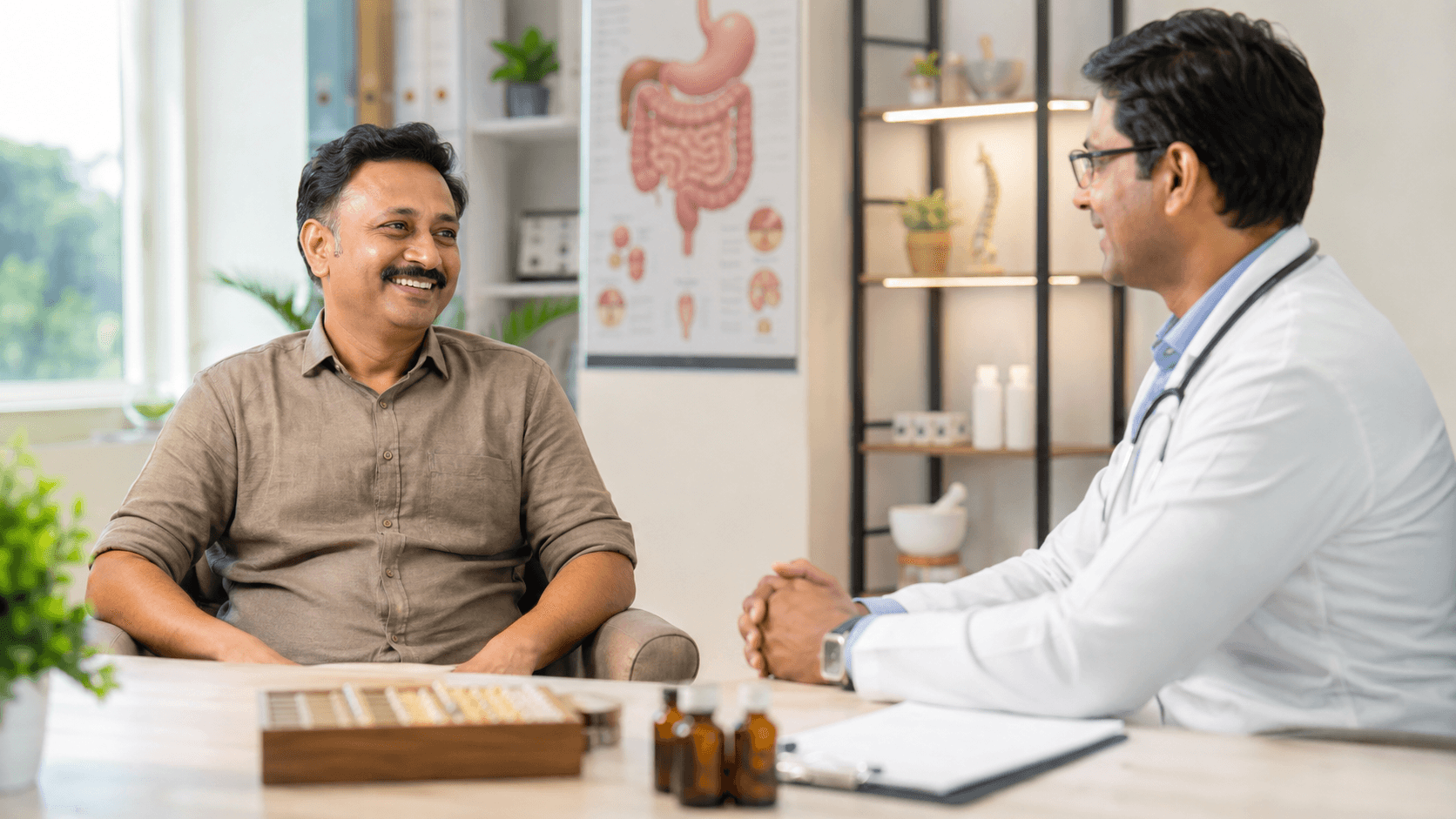
At Pure Life Homeopathy in Vadodara, consultations are designed to understand not only the visible symptoms but also the factors that may be contributing to the condition. The evaluation may include bowel habits, dietary preferences, hydration levels, work patterns, stress levels, physical activity, and previous treatment history. Many patients seek homeopathic treatment because they are looking for a non-surgical and individualized approach to piles management. Homeopathy may be considered as supportive care in suitable cases, particularly during the early and moderate stages of the condition. However, severe bleeding, thrombosed piles, significant prolapse, or complications should always be evaluated by an appropriate healthcare professional and may require conventional medical or surgical management. The goal is to provide personalized guidance, symptom management, lifestyle recommendations, and long-term support based on each patient's unique presentation rather than focusing only on the diagnosis.
At Pure Life Homeopathy Vadodara, consultation is typically centered on the individual rather than on a label alone. A homeopathic treatment plan may consider the symptom timeline, triggers, sleep, appetite, stress pattern, temperature preference, sensitivities, and overall constitution. Homeopathy should be used responsibly and does not replace emergency care, specialist referral, imaging, laboratory work, or conventional treatment when those are necessary.
Lifestyle Recommendations
Lifestyle modification is often one of the most important aspects of piles management. Even the most effective treatment plan may provide only temporary relief if constipation, poor bowel habits, dehydration, or prolonged sitting continue to place excessive pressure on the rectal veins. Simple daily habits can significantly reduce symptoms, improve bowel regularity, and lower the likelihood of recurrence. Consistency is often more important than short-term efforts.
Lifestyle changes are most useful when they are realistic and consistent. Small, repeatable adjustments often do more for long-term progress than extreme short-term routines, especially in chronic conditions that need monitoring over months rather than days.
- Increase dietary fiber through fruits, vegetables, whole grains, and salads
- Drink adequate water throughout the day
- Avoid prolonged sitting on the toilet
- Exercise regularly to support healthy digestion
- Respond promptly to the urge to pass stool
- Avoid excessive straining during bowel movements
- Maintain a healthy body weight
- Reduce prolonged sitting whenever possible
- Include daily walking in your routine
- Seek medical advice if symptoms persist
FAQ
Can piles be treated without surgery?
Yes. Many mild and moderate cases can often be managed through dietary improvements, lifestyle modifications, medical care, and individualized homeopathic support. The need for surgery depends on the severity of the condition and professional medical assessment.
What are the early signs of piles?
Early symptoms may include mild bleeding during bowel movements, itching around the anus, occasional discomfort, and a feeling of incomplete bowel evacuation.
Can constipation cause piles?
Yes. Chronic constipation and repeated straining during bowel movements are among the most common contributing factors in the development of piles.
Are piles permanent?
Not necessarily. Many individuals experience significant improvement when contributing factors such as constipation, poor diet, dehydration, and prolonged sitting are addressed.
Which foods help prevent piles?
Fiber-rich foods such as fruits, vegetables, whole grains, oats, and legumes may help support healthy bowel movements and reduce constipation.
Can piles return after treatment?
Yes. Recurrence is possible if underlying causes such as constipation, poor dietary habits, obesity, or prolonged sitting are not addressed.
Is bleeding during stool always caused by piles?
No. Although piles are a common cause of rectal bleeding, other conditions may also produce similar symptoms. Professional evaluation is recommended.
Can pregnancy increase the risk of piles?
Yes. Increased pressure within the abdomen during pregnancy may contribute to the development of hemorrhoids in some individuals.
When should surgery be considered for piles?
Surgical evaluation may be considered in severe cases involving significant prolapse, recurrent bleeding, thrombosis, or symptoms that do not respond to conservative treatment.
Can homeopathy be used alongside conventional treatment?
Many patients choose homeopathy as a complementary approach while following appropriate medical advice. Treatment decisions should always be discussed with qualified healthcare professionals.
Conclusion
Piles are among the most common anorectal conditions and can significantly affect comfort, confidence, and quality of life. Fortunately, surgery is not always necessary. Many patients with early and moderate piles experience improvement through a combination of dietary changes, healthy bowel habits, lifestyle modifications, medical management, and individualized homeopathic care. Understanding the symptoms, causes, risk factors, and preventive measures allows patients to take proactive steps before the condition progresses. Early consultation is often the key to successful management and may help reduce the likelihood of complications. If you are looking for personalized piles treatment in Vadodara, Pure Life Homeopathy offers consultation-focused care that emphasizes individualized assessment, patient education, lifestyle guidance, and treatment plans tailored to the person rather than just the diagnosis.
If you want an individualized discussion about symptoms, triggers, and supportive homeopathic treatment in Vadodara, Pure Life Homeopathy, Vadodara offers consultation-focused care aimed at patient education, realistic expectations, and a treatment plan tailored to the person rather than just the diagnosis.